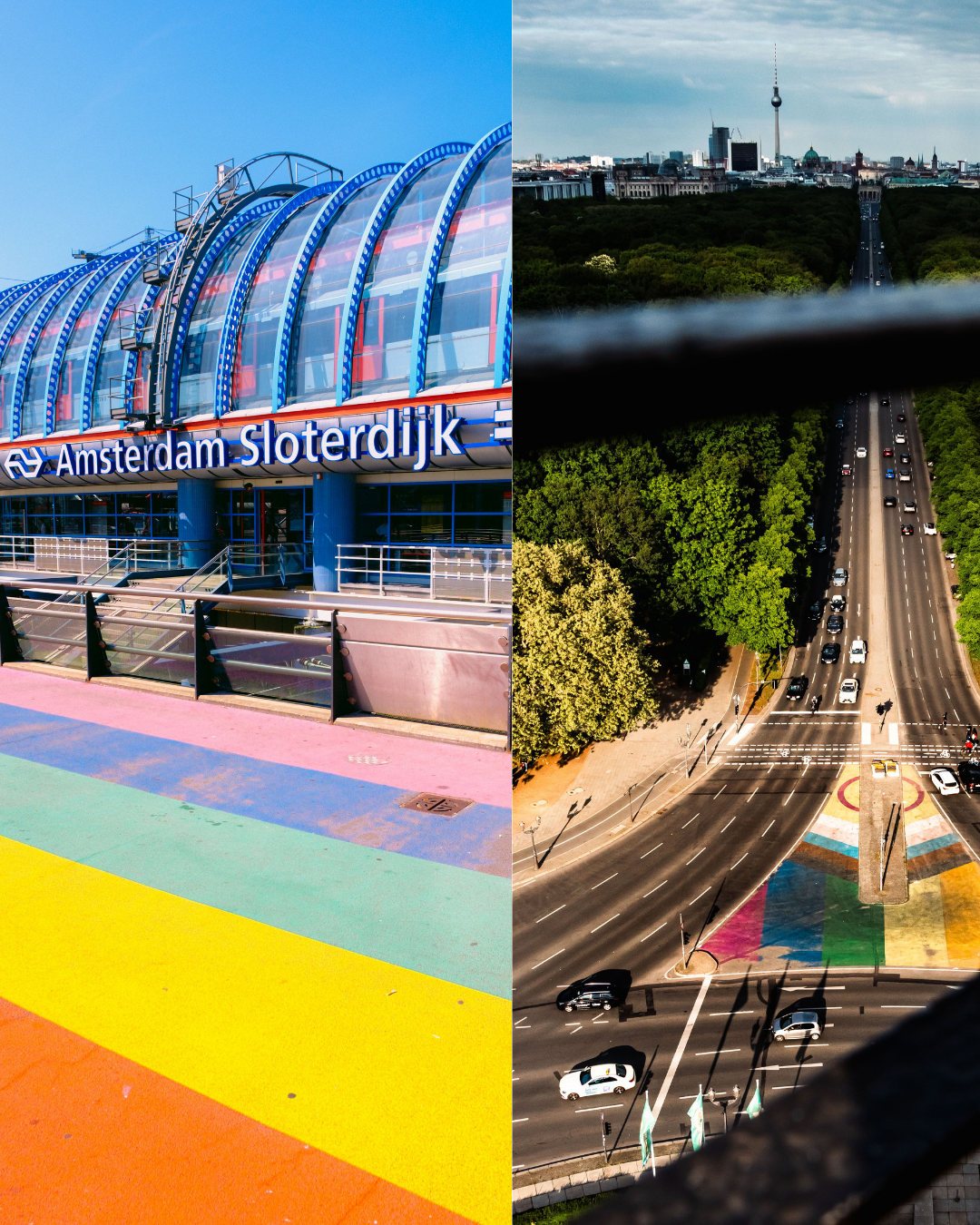
Ask about LGBT+ travel in Europe and the conversation tends to circle around the same handful of names — Mykonos, Sitges, Gran Canaria. Two cities that deserve to be in that conversation just as often are Amsterdam and Berlin, both with genuinely deep, historically significant LGBT+ scenes that offer something different from a beach-and-Pride-week destination: a year-round, city-based scene with real depth and history behind it.
Amsterdam: Decades of Openness
Amsterdam has one of the longest histories of LGBT+ acceptance anywhere in Europe. The Netherlands decriminalised homosexuality in 1811, and Amsterdam in particular has built on that early foundation for well over a century, becoming one of the continent's most consistently welcoming cities long before many others began to catch up.
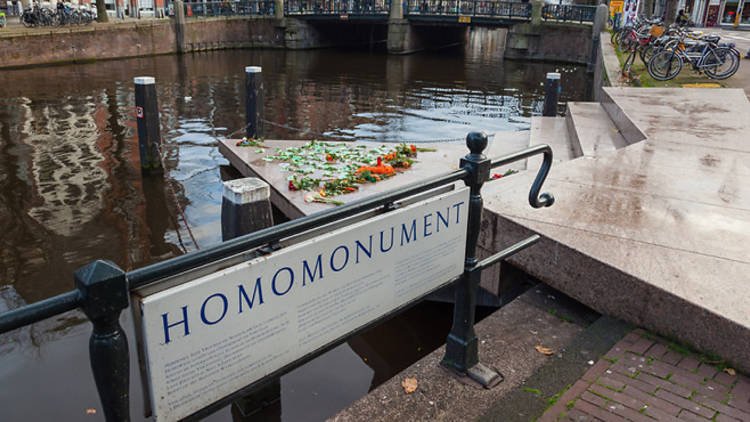
The Homomonument, unveiled in 1987 near the Westerkerk church, was the world's first public memorial dedicated to LGBT+ people persecuted for their sexuality — a genuinely significant landmark, both symbolically and historically, and still a focal point for remembrance and celebration today. Reguliersdwarsstraat, in the city centre, is Amsterdam's main LGBT+ nightlife street, packed with bars and clubs within easy walking distance of each other, while the Red Light District's Warmoesstraat holds some of the city's older, more established leather and fetish bars, reflecting a scene with genuine range rather than a single narrow identity.
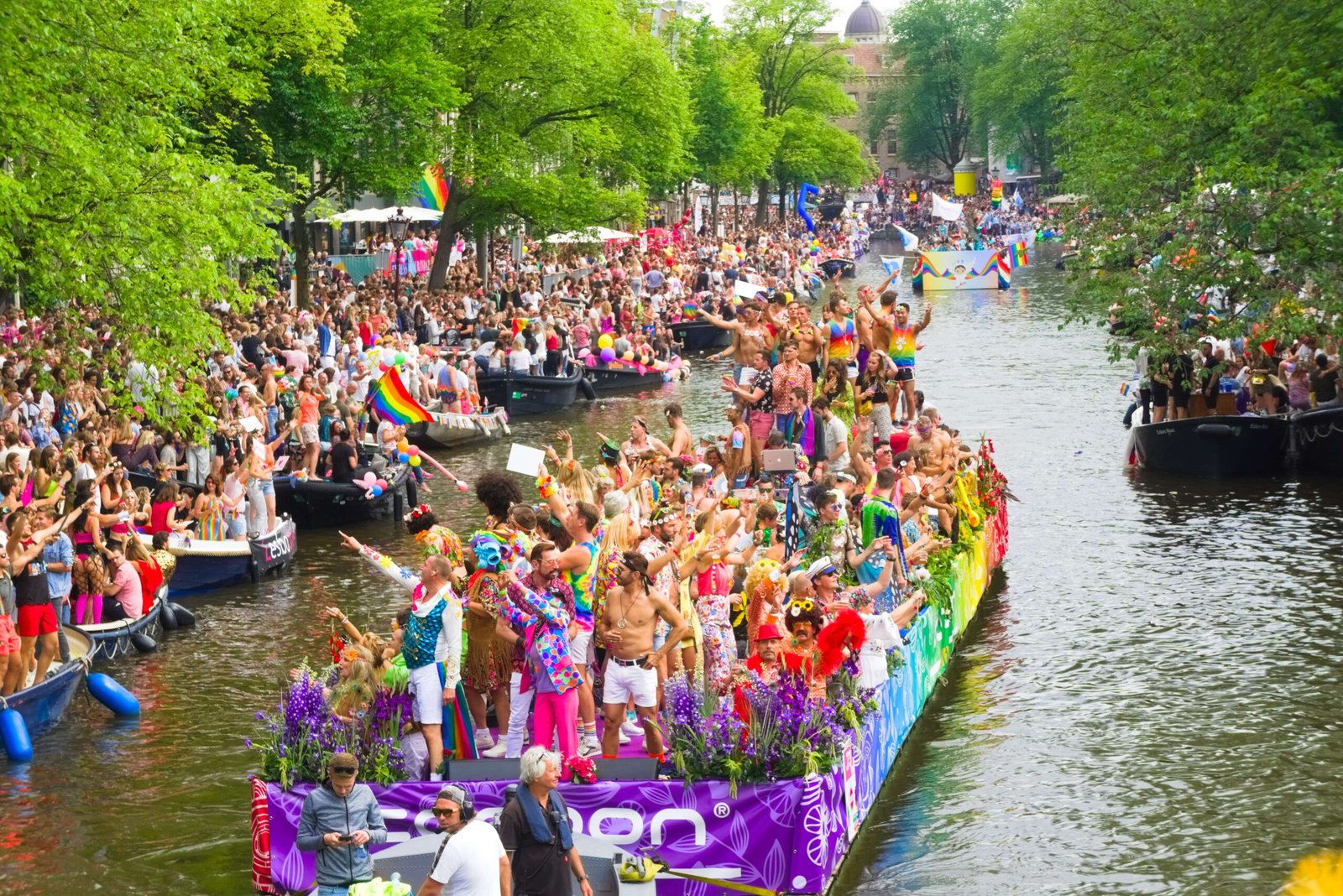
Amsterdam Pride, known as Canal Pride, is one of the most distinctive Pride celebrations anywhere in the world — rather than a street parade, boats decorated by community organisations, bars, and sponsors move along the city's canals, watched by crowds lining the bridges and canal-side streets. Typically held in late July or early August, it transforms the entire city for the better part of a week, though the atmosphere throughout Amsterdam remains genuinely welcoming well beyond Pride season itself.
Berlin: Edgier, Alternative, Historically Profound
Berlin's LGBT+ history runs deeper than most visitors realise. Schöneberg, the city's historic gay district, was already a thriving centre of LGBT+ culture back in the 1920s Weimar era — a period of remarkable openness that was violently reversed under Nazi rule, making Berlin's LGBT+ history one of both extraordinary early progress and profound tragedy. The Memorial to Homosexuals Persecuted Under Nazism, a stark concrete monument near the Tiergarten, stands as a genuinely moving acknowledgment of that history, and is well worth visiting for anyone wanting to understand the fuller context behind the city's current openness.
Modern Berlin's scene is famously edgier and more alternative than Amsterdam's — the city's techno and club culture, centred around Kreuzberg and Friedrichshain, has a global reputation, with door policies at some of the city's most famous clubs becoming almost as well-known as the venues themselves. Schöneberg remains the more traditional heart of the scene, with a dense concentration of bars catering to a wide range of the community, while Kreuzberg offers a younger, more alternative, and notably diverse atmosphere.
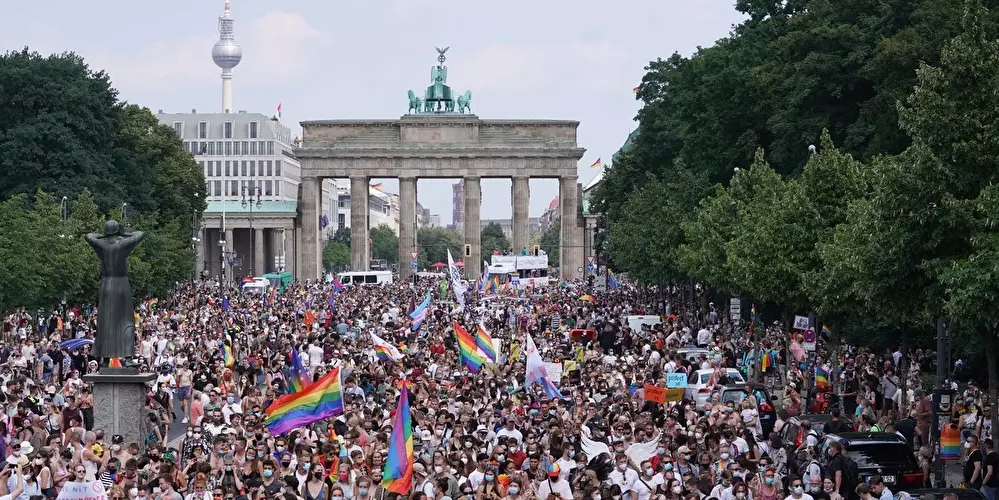
Berlin's Christopher Street Day, held in late July, is one of the largest Pride celebrations in Europe, drawing enormous crowds through the city centre. Beyond Pride itself, Berlin's scene runs at genuine intensity year-round — this is a city that rarely feels like it's between events.
Two Very Different Personalities
Amsterdam and Berlin offer genuinely different experiences, despite both being major European LGBT+ capitals. Amsterdam is elegant and relatively laid-back — canal-side charm, a compact and walkable city centre, and a scene that feels integrated into the wider city rather than separate from it. Berlin is grittier, more alternative, and more intense, with a nightlife scene that operates on a completely different scale and energy, alongside a historical weight that adds real depth to a visit beyond the nightlife itself.
Neither is objectively better — the choice really comes down to what kind of trip is wanted. Amsterdam suits travellers wanting elegance, culture, and a relaxed pace alongside a welcoming scene. Berlin suits those wanting edge, nightlife, and a city with genuine historical and political weight behind its current openness.
Practical Planning Notes
Both cities fly direct from the UK in around 1-1.5 hours, making either an easy weekend or long-weekend trip. Amsterdam's Canal Pride typically falls in late July or early August, while Berlin's Christopher Street Day usually lands in late July — worth checking exact dates each year, since both shift slightly.
Outside of Pride season, spring and autumn offer the most comfortable weather for exploring either city on foot, while both remain genuinely lively and welcoming destinations at any time of year — neither is a city that only comes alive for one week annually.
Accommodation is worth booking well ahead for either city during Pride season specifically, since prices and availability shift dramatically in the surrounding weeks, much like the pattern seen around Spain's festival season. Outside of Pride, both cities offer good value relative to their size and stature as major European capitals, particularly compared to some of the more resort-focused LGBT+ destinations further south.
Why Both Deserve More Attention
Mykonos, Sitges, and Gran Canaria earn their reputations, but they represent one particular kind of LGBT+ travel — sun, beaches, and a resort-based scene. Amsterdam and Berlin offer something genuinely different: major European capitals with deep, historically significant LGBT+ communities, world-class culture and nightlife, and a scene that's every bit as welcoming without needing to be built around a beach at all.
Thinking about Amsterdam, Berlin, or trying to decide between the two? Get in touch and I'll help you plan a trip that actually suits the experience you're after.